
Menu
The pilot
A matched-control pilot, sized to your program
Tree Guardian on newly planted street trees, alongside matched controls on the surface watering bags you use today — same species, same neighbourhoods, same planting window. Typically 50 trees per side, scaled to your planting volume. Survival is read at 12 and 24 months; visit cadence and visible canopy condition are tracked with simple photo check-ins; wireless soil-moisture sensors are an optional add-on should you wish for more data. You test it with our guidance and review throughout.
The math a pilot has to beat
Pilot kits are $250 per tree; volume pricing is $150. One avoided failure covers thirteen trees' worth of pilot kits. At Vancouver's current 2,000 trees per year, the conservative model projects $440K in annual savings — $240K from watering labour and $200K from mortality reduction — scaling toward ~$1.45M at the city's 2050 planting target.
Explore the full savings model →What pilot partners receive
Priority support through establishment — a direct line to the founder, on site for install and first fills
The results as they come in — survival, canopy condition, and visit-cadence reporting shared throughout, rather than held for a final report
A pilot shaped by your feedback — we review results with your team and adapt the kit and the offer to what your program actually needs
First-mover evidence — results your own council and budget cycle can cite before wide rollout
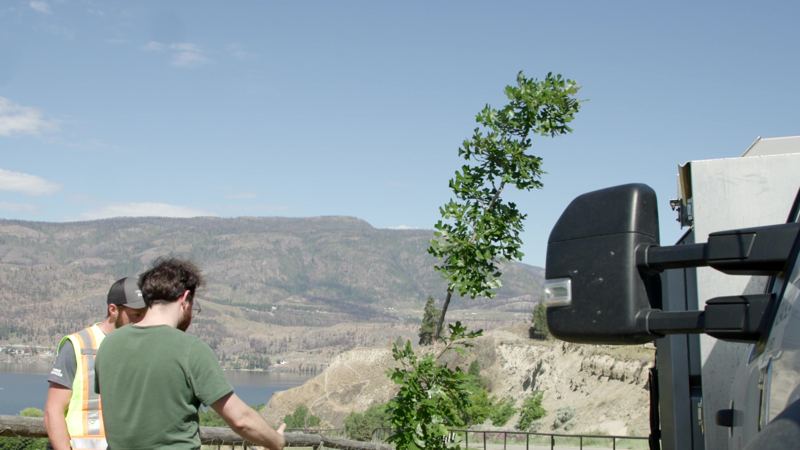
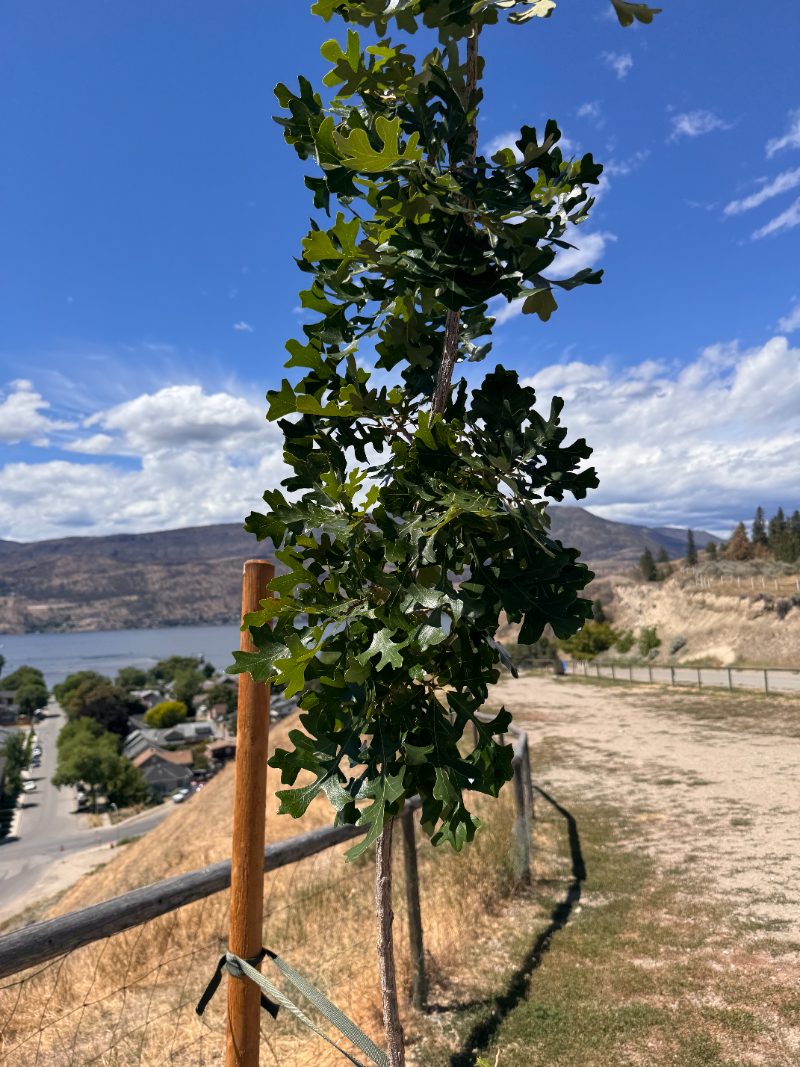
Your newest trees, green all summer. Trees on Tree Guardian look healthier and hydrated — less leaf scorch, less wilting, fuller canopies through the hottest weeks. Four weeks into our current pilot, that's the difference on the ground: dense green canopy through 30°C heat while matched controls thin and yellow a few metres away. It's the result residents notice and councils remember, in year one, long before the survival data lands. See it in the field results →
Passive Earth is a Vancouver company. Tree Guardian went into the ground at a BC Interior municipal pilot in summer 2026, and a ten-tree instrumented science pilot at UBC's Hampton Place — continuous root-zone soil-moisture sensors with postdoctoral monitoring — is pending with UBC and the University Neighbourhoods Association. The step after that is validating at municipal scale. That's where you come in.
Common questions
Does it change how crews plant?
The kit drops into the pit at planting and installs in about two minutes alongside standard practice, with the equipment crews already carry.
What's in the kit?
A tree bag with drop-in wicking irrigation, plus inoculated biochar and mycorrhizal fungi for the soil it roots into. Full technical detail is available to qualified partners under NDA.
How much water does it hold, and how long does a fill last?
75 litres. Best practice is a refill every seven days, and the fill carries a three-day buffer beyond that.
How do refills work?
Crews top-fill it like a standard bag — same truck, same hose. One fill covers the full window.
How is the pilot structured?
Tree Guardian trees alongside an equal number of matched controls on your current bags — same species, neighbourhoods, and planting window. Survival at 12 and 24 months, with simple photo and visit tracking from day one. Wireless soil-moisture sensors are an optional add-on should you wish for more data.
What if a unit is damaged or vandalized?
The bag is RF-welded PVC — a heavier build than a standard surface bag — and pilot units are replaced at no extra cost.
What about winter?
Best practice is to remove the bag for the winter and redeploy it in spring — it preserves the bag’s durability and is healthier for the tree.
What happens after establishment?
Crews water as needed, or add one of our follow-on watering products that spreads water wider as roots extend.
Who handles procurement?
Directly with the founder — email or (604) 727-5457.
Not ready to talk yet? Take the one-pager.
The pilot design, savings model and pricing on a single page — built to forward to your urban forestry lead or council. We’ll email you the PDF and check in once to see if it was useful. We respect your inbox — that’s it.
Start the conversation
Tell us about your planting program and we'll come back with a pilot proposal — or skip the form and book time directly.