
Menu
How it works
A drop-in establishment kit that installs in minutes
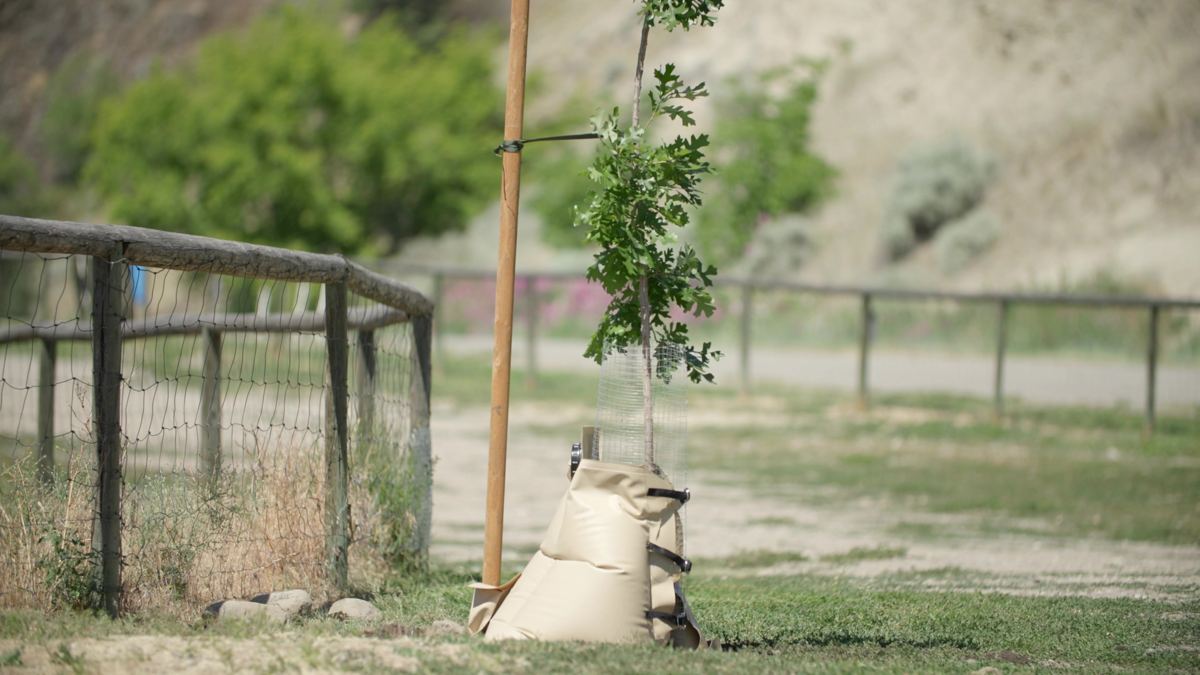
The tree bag + drop-in irrigation system provides continuous moisture for 7–10 days per fill and improves soil biology with inoculated biochar and mycorrhizal fungi. Crews plant exactly as they do now: the kit drops into the pit at planting, alongside standard practice.
Four steps at planting
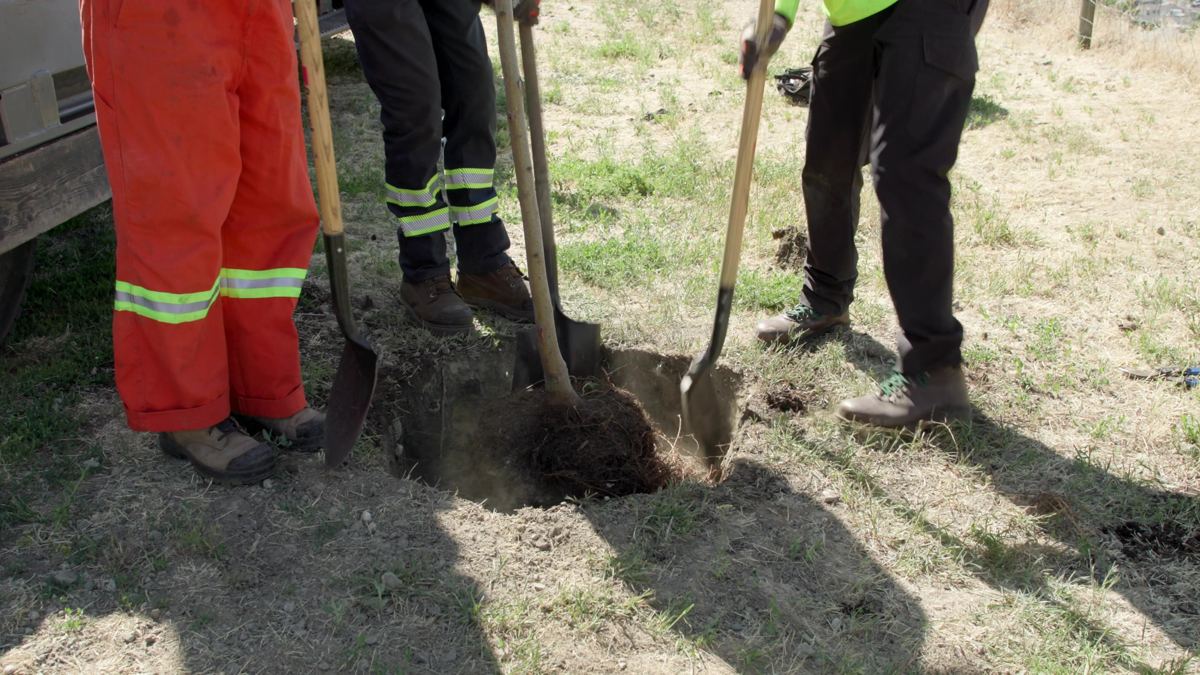
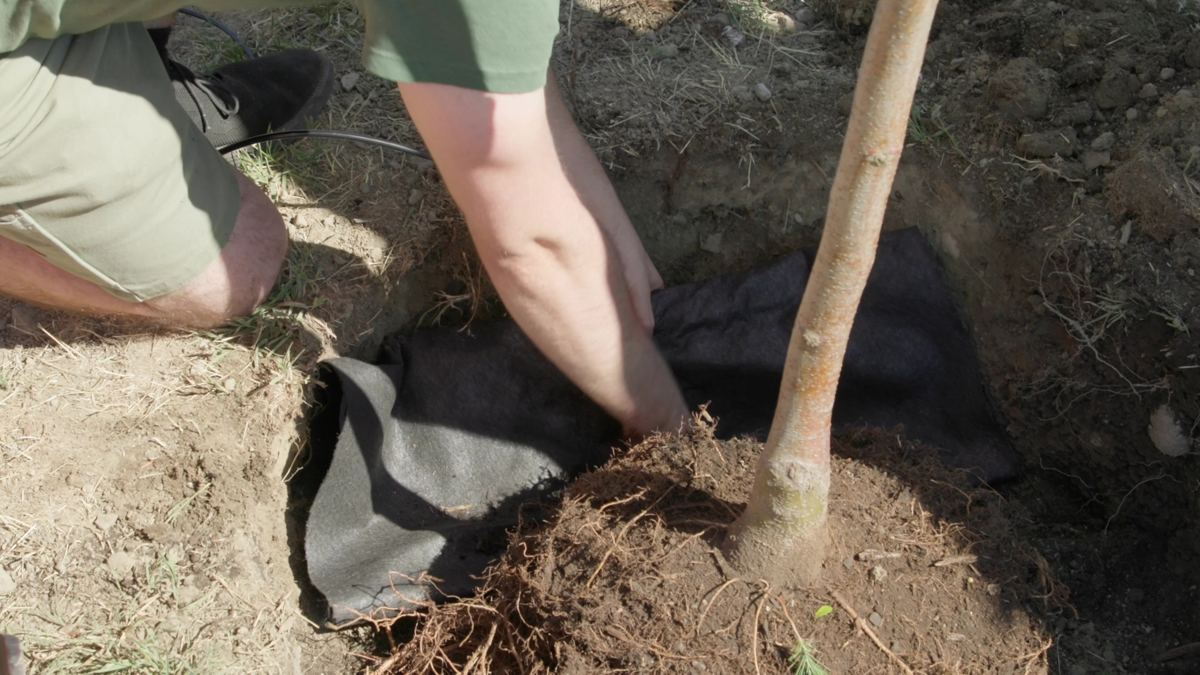
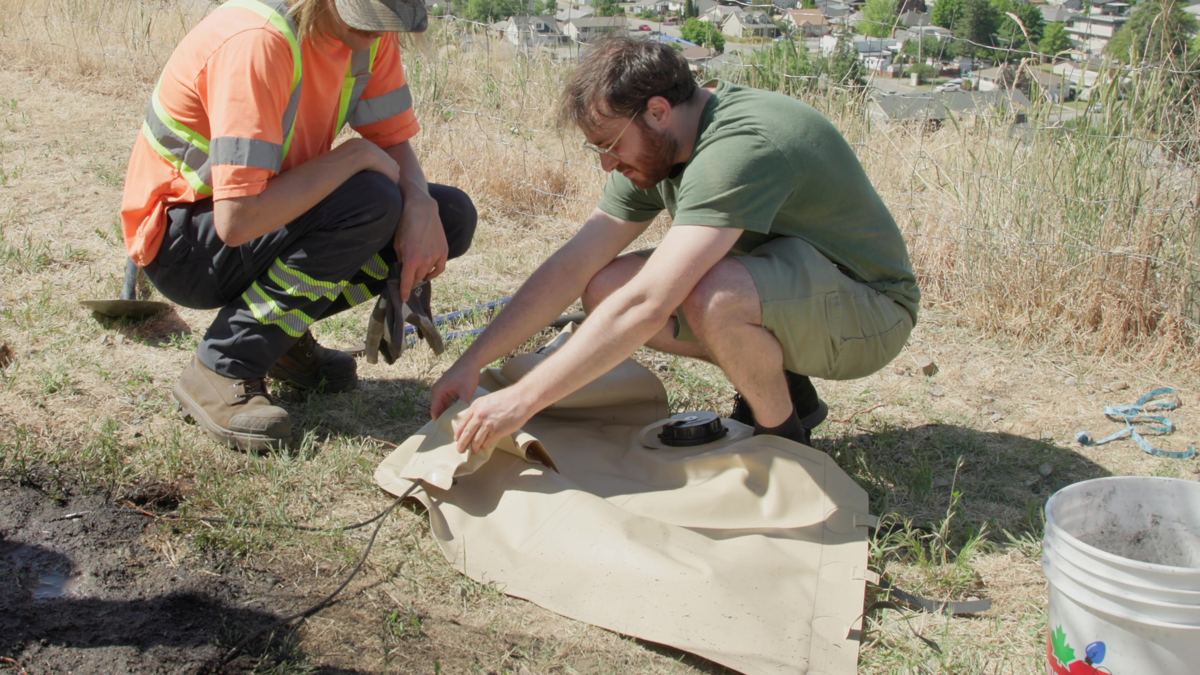
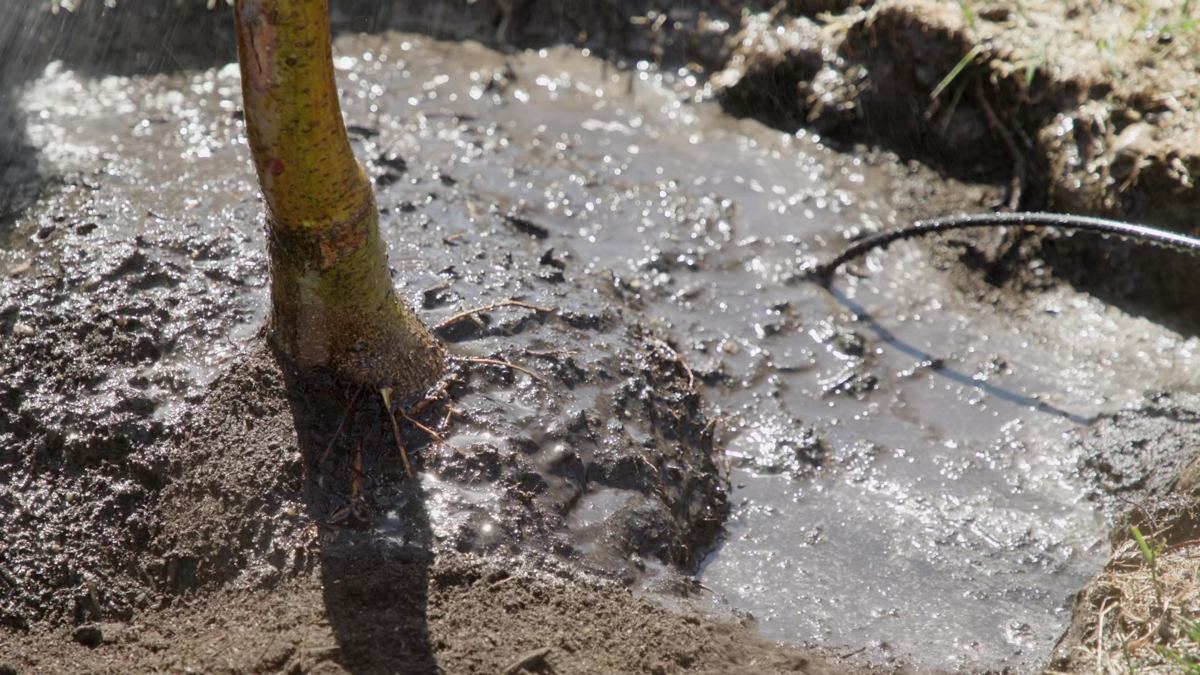
Watch the install — two minutes, start to finish
Shot at the municipal pilot: municipal crews drop the kit into the pit alongside standard planting practice — dig, place the pillow, connect the bag, fill.
Open on YouTube →What's in the kit
Tree bag + drop-in irrigation
Meters water into the root ball by wicking, steadily across a 7–10 day window, so the full fill reaches the tree. Unlike a wrap-around trunk bag, it’s shaped to leave the root flare room to breathe, with an opening so moisture is never trapped against it.
Inoculated biochar
Improves water retention and soil structure in the root zone.
Mycorrhizal fungi (AGTIV REACH)
Establishes the below-ground biology that helps roots reach water and nutrients.
Patent pending — full technical details available to qualified partners under NDA. Gravity-fed and nature-based.
Against the status quo
Best practice for newly transplanted trees: water daily for the first two weeks, then every 2–3 days through week 12 (University of Minnesota Extension; adopted as policy by Saint Paul Parks) — a schedule no city crew can keep across thousands of trees. The same UMN guidance notes a standard surface bag empties its 14–15 gallons (about 55–68 litres) in 5–9 hours.
Less water, going further. Every litre is hauled to the site by a crew truck. Tree Guardian meters its fill into the root ball across 7–10 days, so the water cities pay to deliver goes into the tree. Watering the roots directly, less is lost to evaporation and runoff.
See it working in the field, or run the numbers.