
Menu
Field results · BC Interior pilot · summer 2026
Same site, same watering cycle. Five weeks in.
35°C stretches, heavy wind, full sun, no shade. Every tree on the same 7-day cycle, including one that stretched to 10 days over a weekend. This page is the running record: it grows as the pilots report.
The five-week comparison
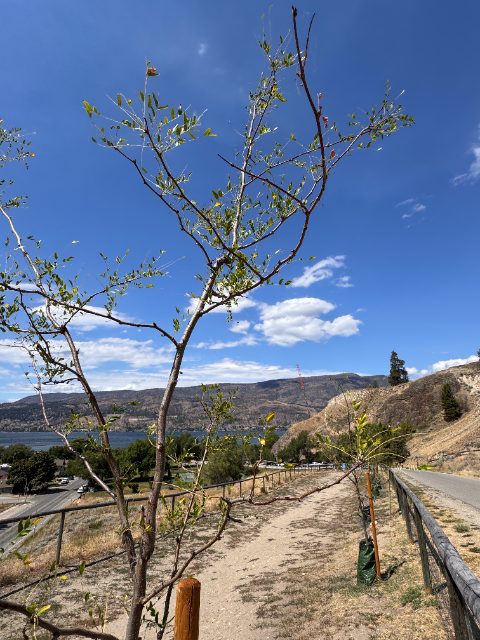 Control — standard bag
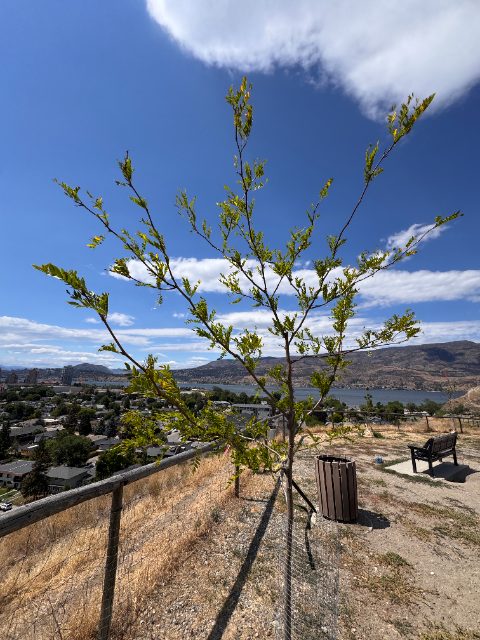 Tree Guardian
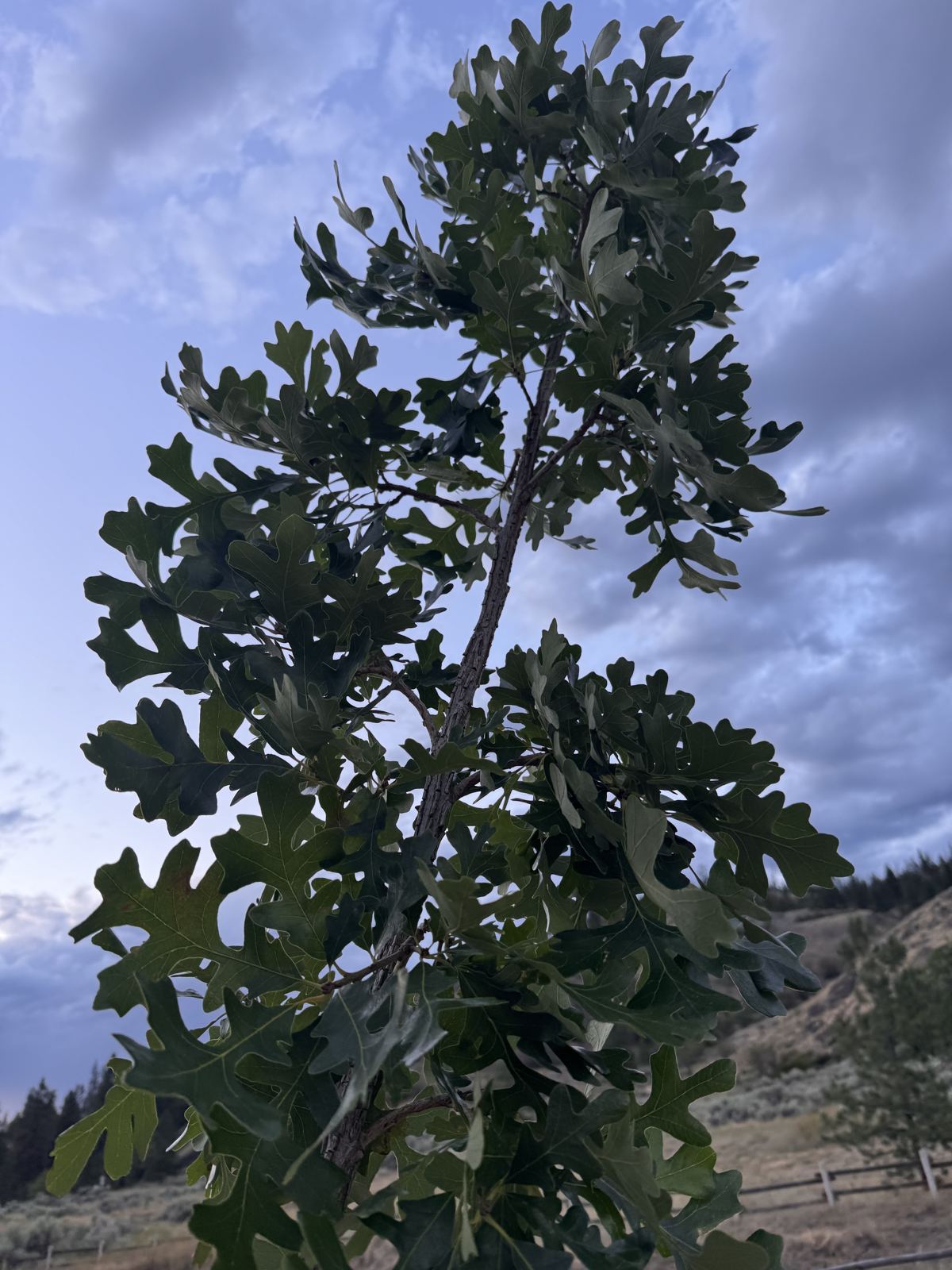 Tree Guardian
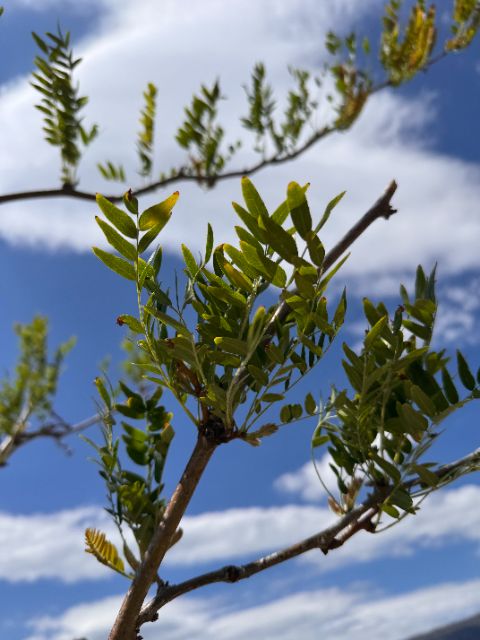
Our trees are thriving — a Tree Guardian honey locust holding full canopy through the same heat that's thinning the controls. Straight from a phone at the site.
The install, in two minutes — municipal crews at the pilot site.
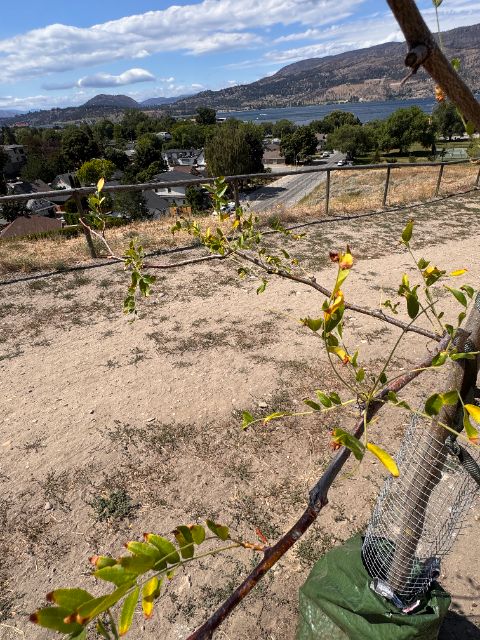
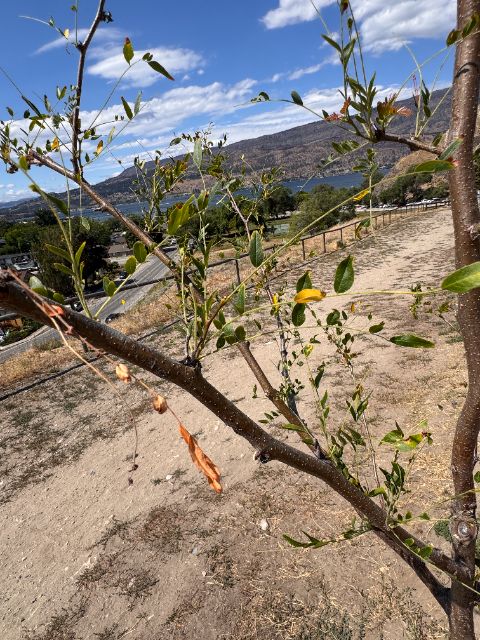
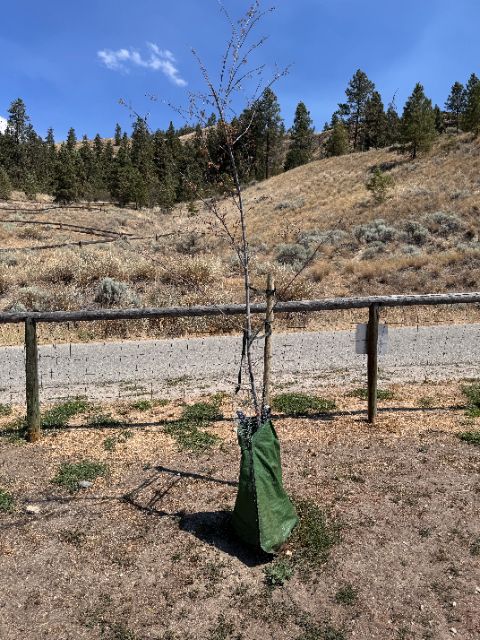
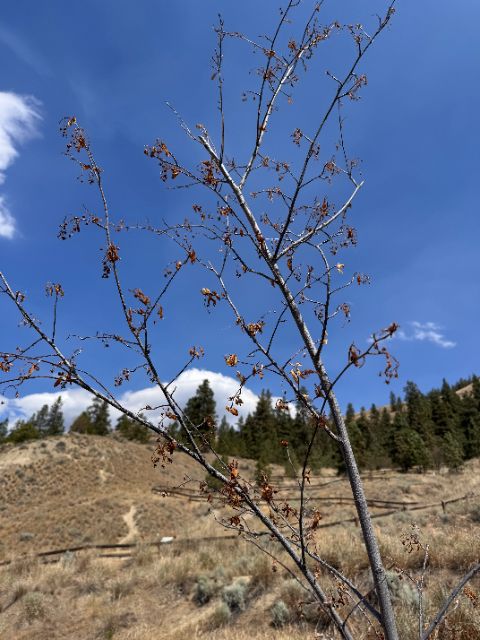
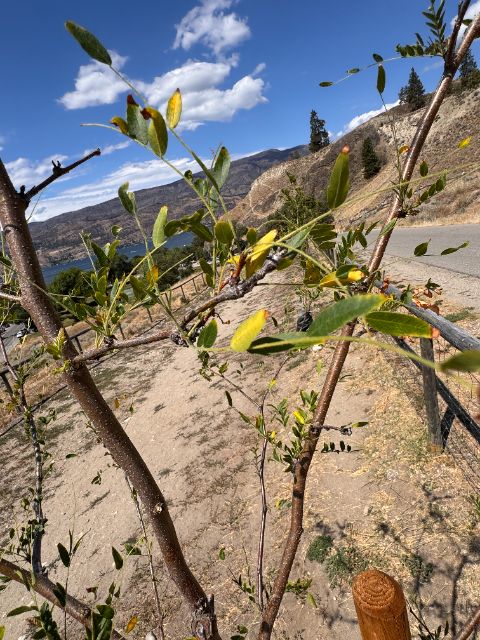
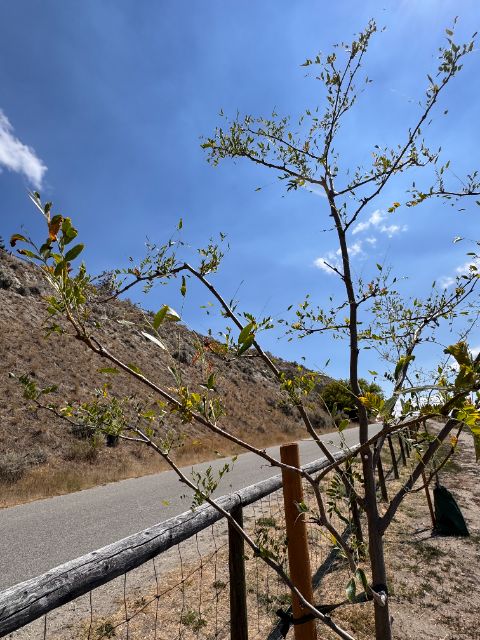
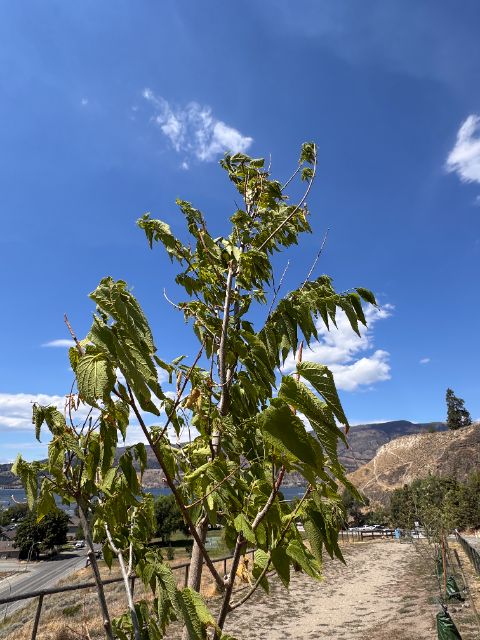
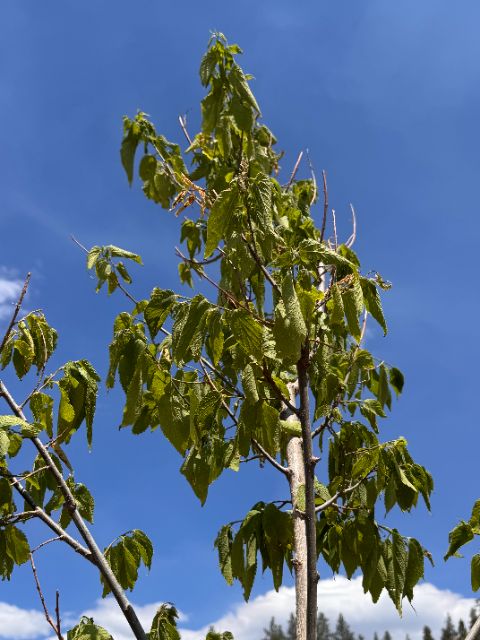
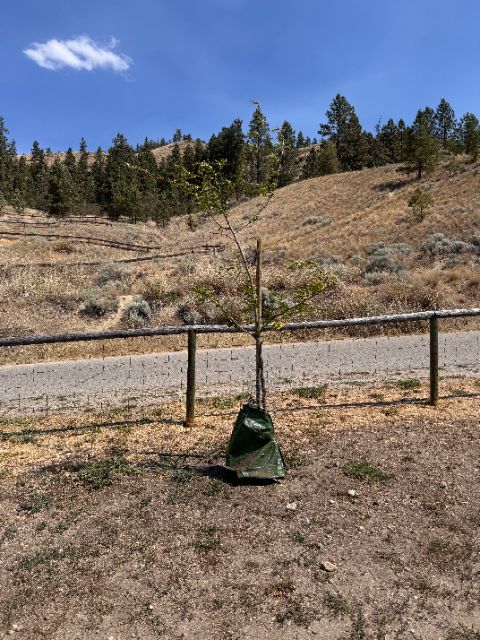
The control trees, up close — beside ours
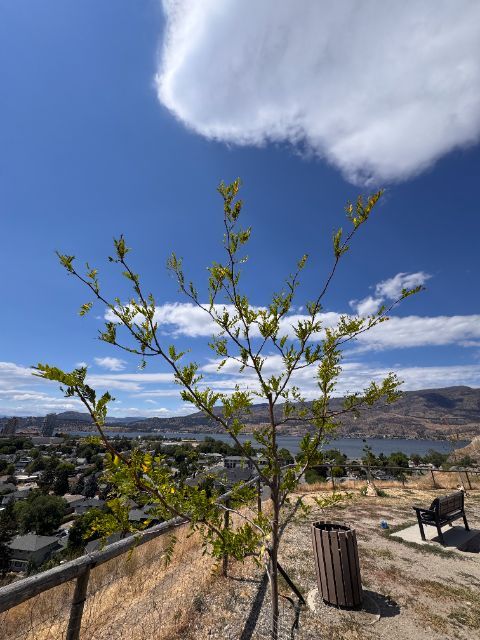
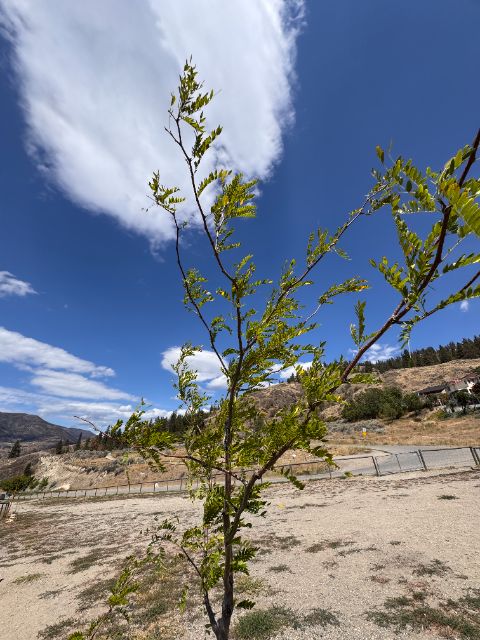
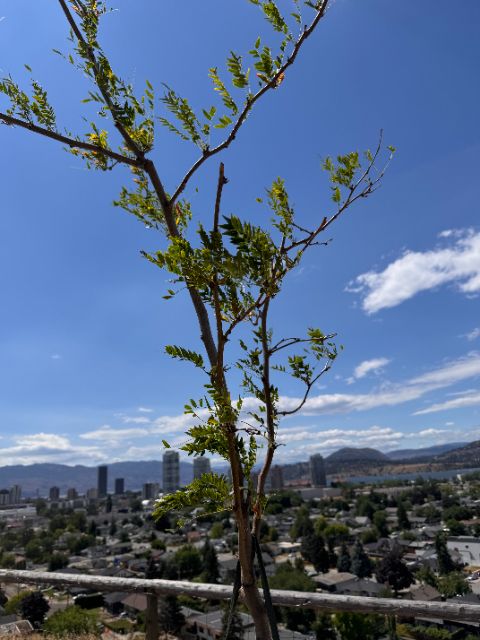
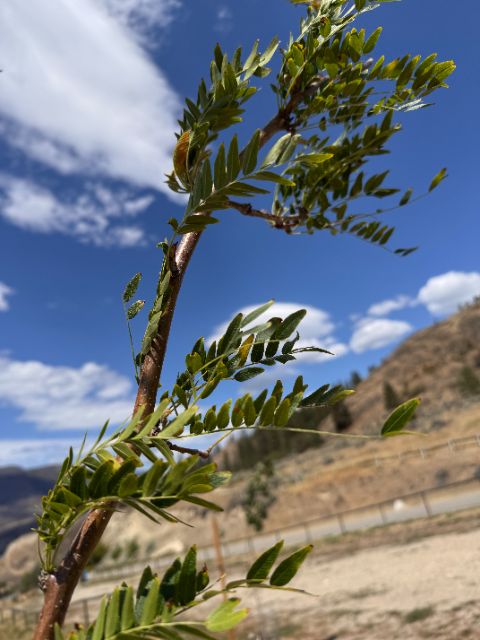
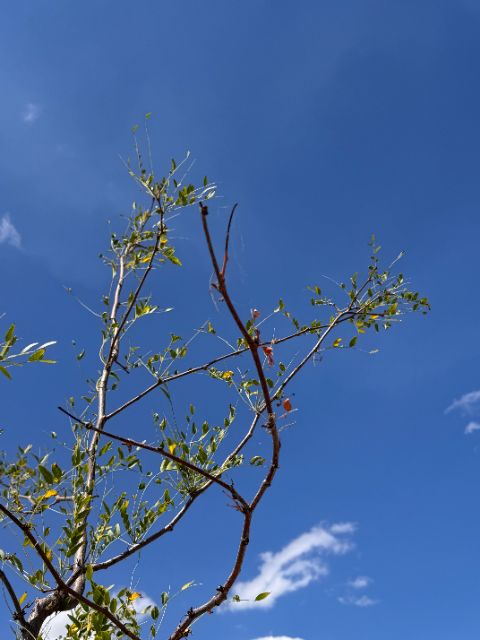
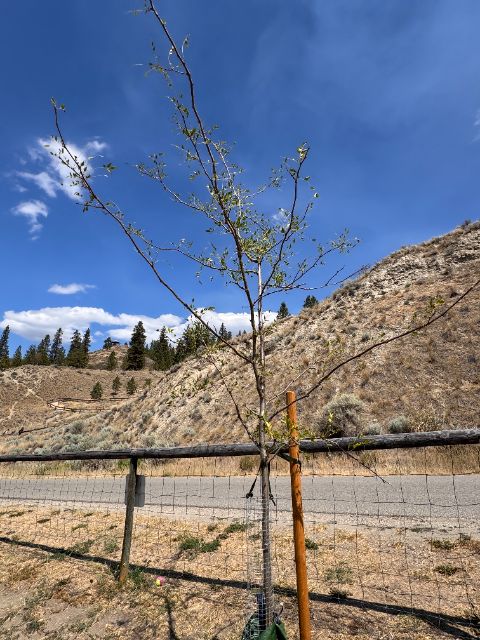
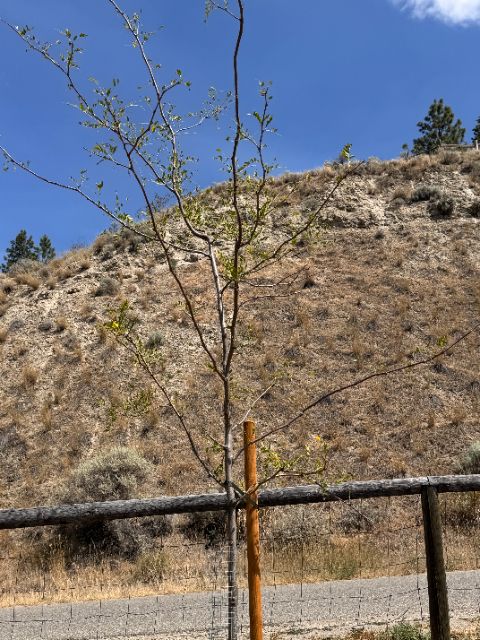
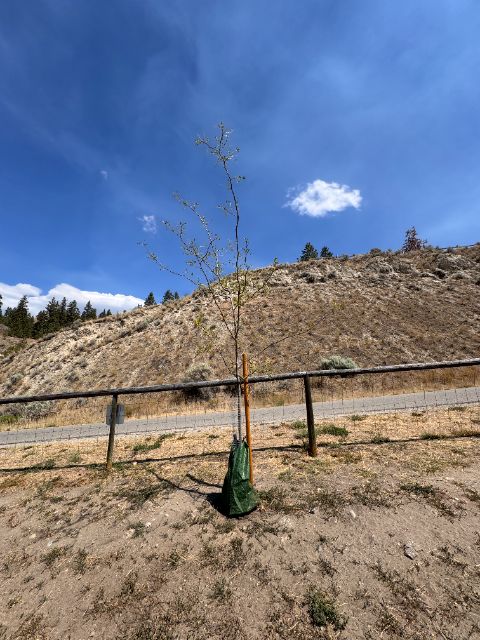
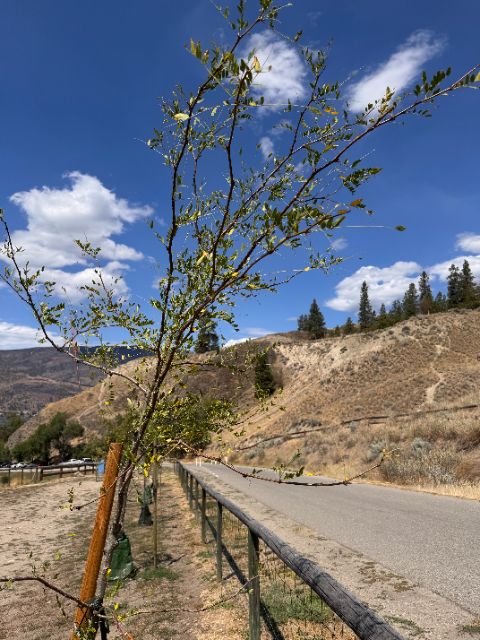
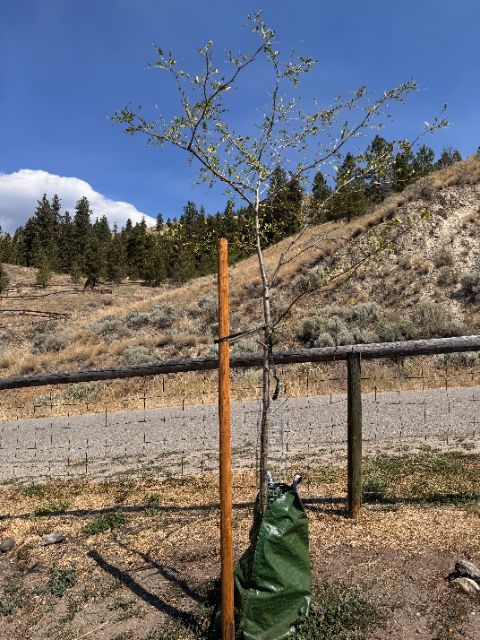
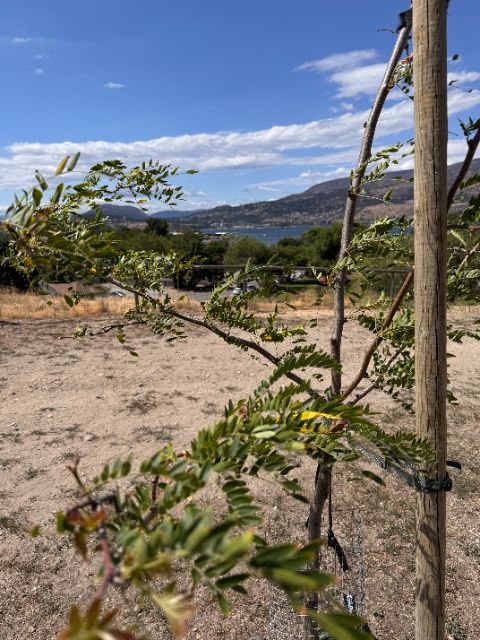
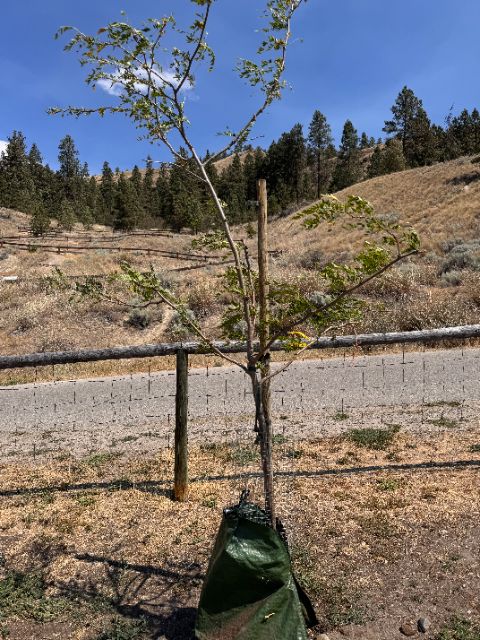
Honey locust controls on standard surface watering bags, photographed at five weeks — sparse canopies, yellowing and scorched leaflets. The gallery advances on its own; click any photo to enlarge it. On the left, our Tree Guardian trees from the same site on the identical watering cycle — both galleries advance on their own, side by side.
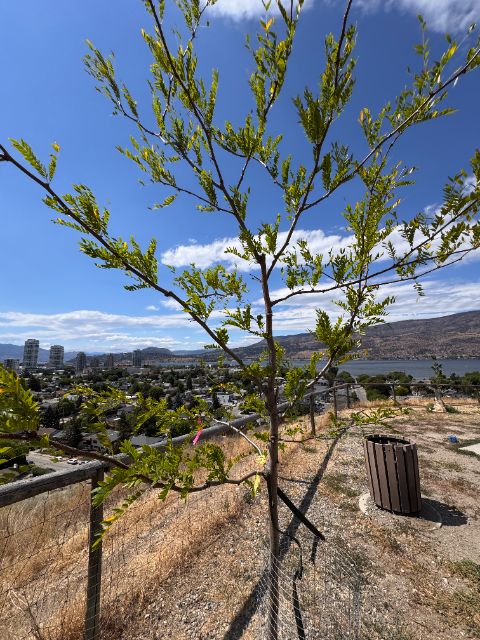 Tree Guardian
 Tree Guardian
 Tree Guardian
 Tree Guardian
 Tree Guardian
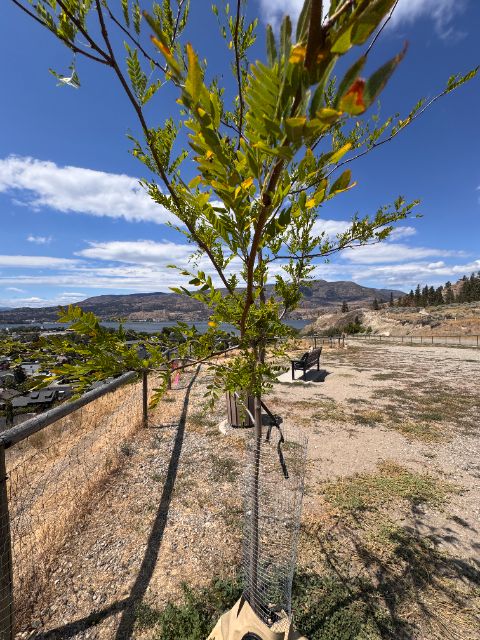 Tree Guardian
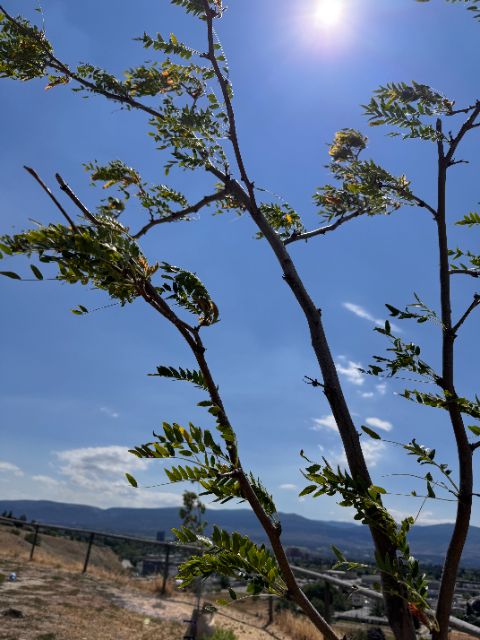 Tree Guardian
 Tree Guardian
 Tree Guardian
 Tree Guardian
 Tree Guardian
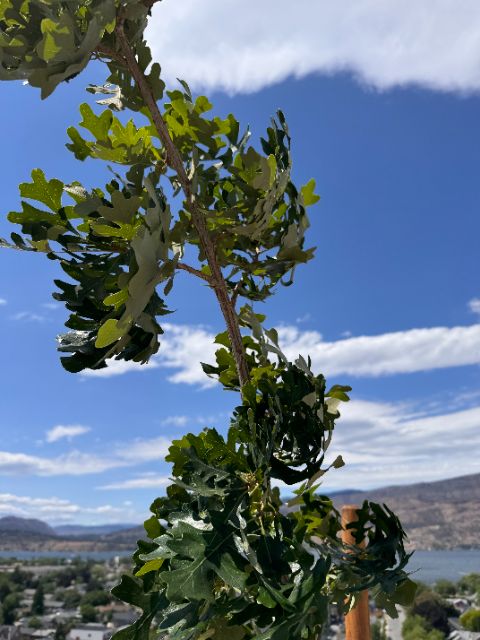
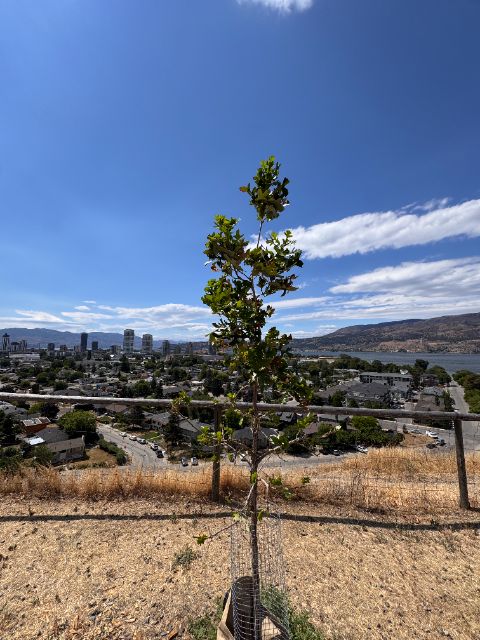 Tree GuardianA week-1 assembly error in this early prototype stalled water delivery and the bur oak shed its leaves — it grew back a healthy canopy. Our newest design eliminates this.
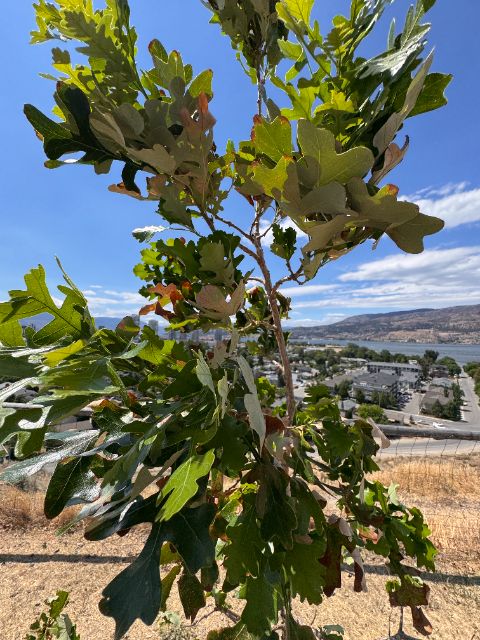 Tree GuardianA week-1 assembly error in this early prototype stalled water delivery and the bur oak shed its leaves — it grew back a healthy canopy. Our newest design eliminates this.
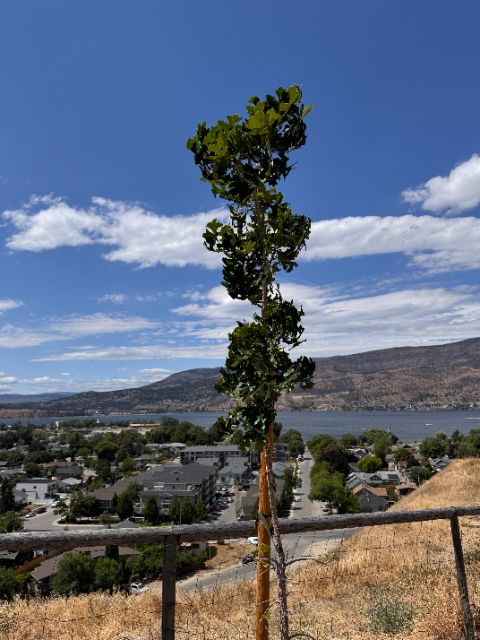
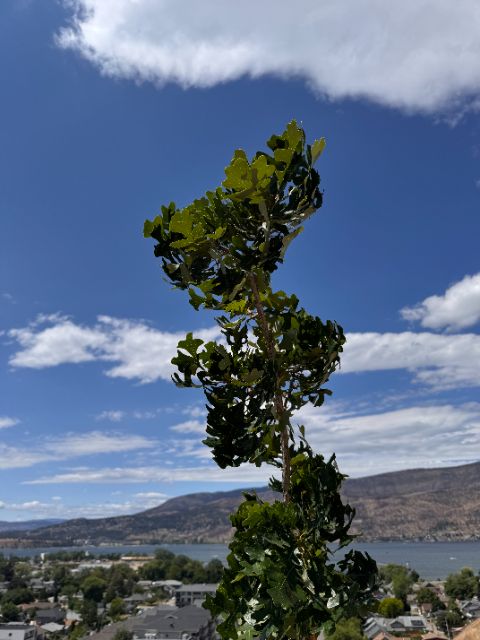
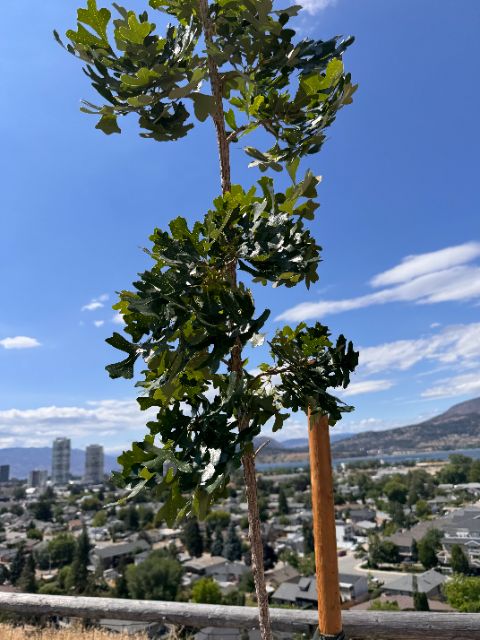
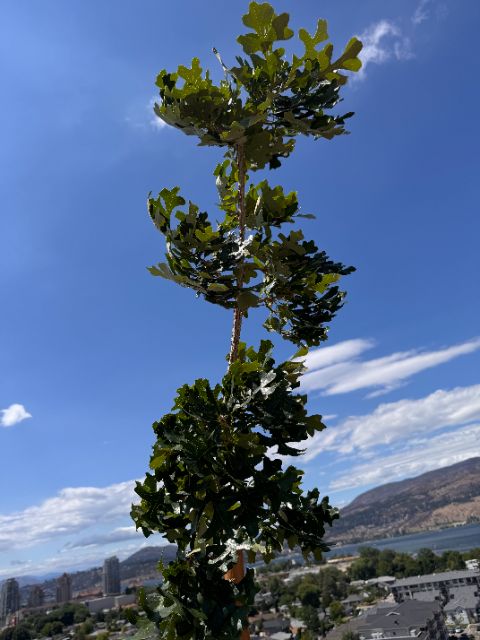
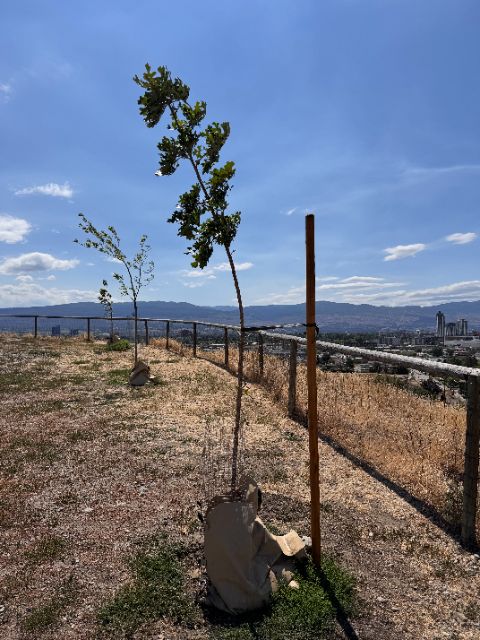
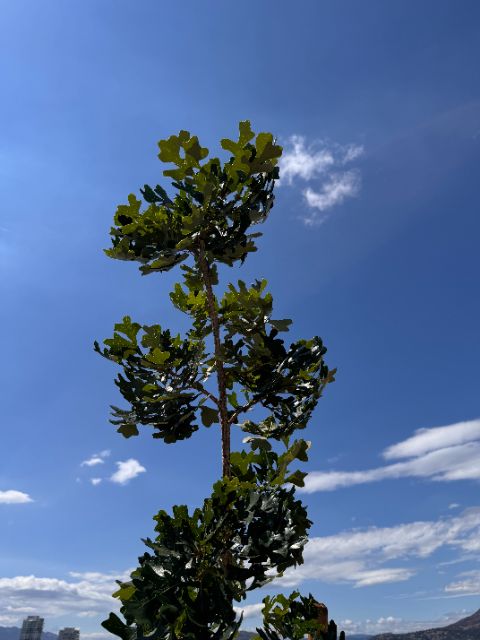 Tree GuardianOur other bur oak — dense, healthy canopy through the same five weeks of heat and wind.
 Tree Guardian
 Tree Guardian
 Tree Guardian
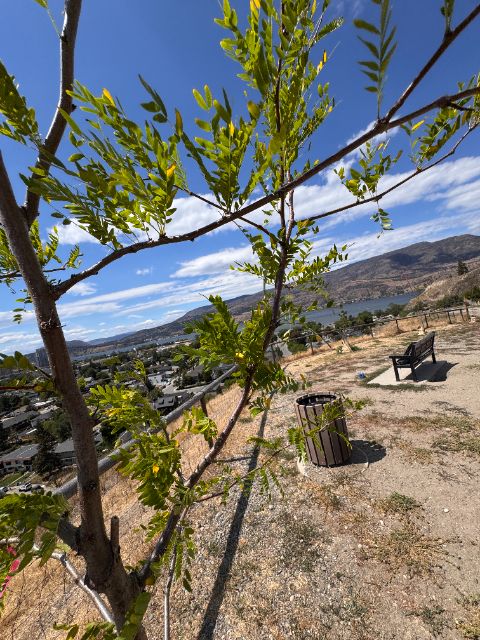 Tree Guardian
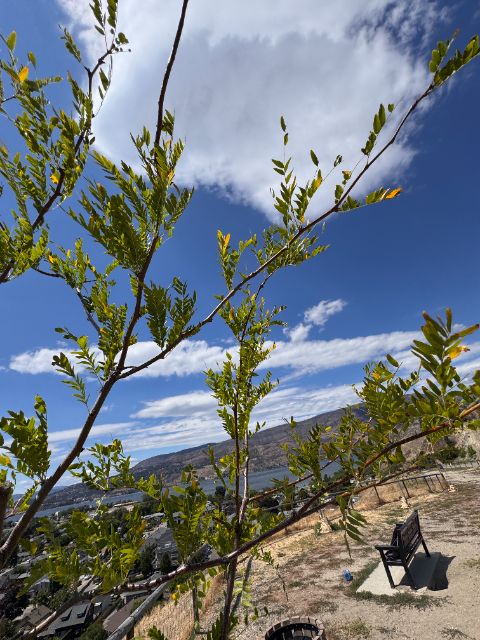 Tree Guardian
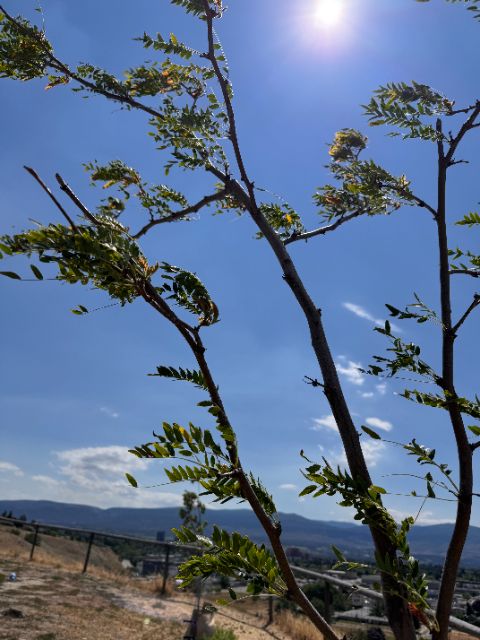 Tree Guardian
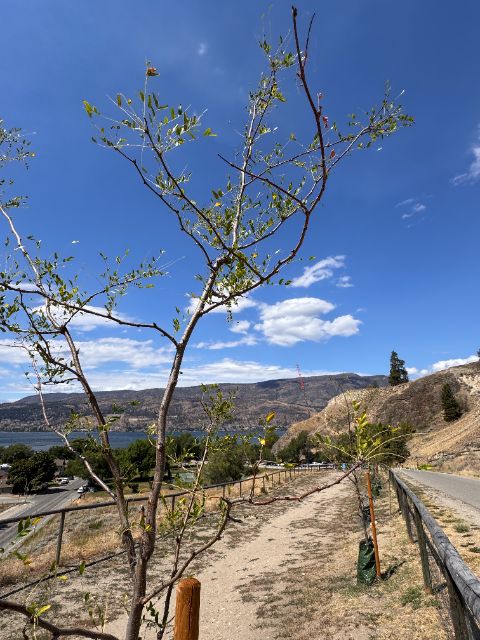 Control
 Control
 Control
 Control
 Control
 Control
 Control
 Control
 Control
 Control
 Control
 Control
 Control
 Control
 Control
 Control
 Control
 Control
Where the water actually goes
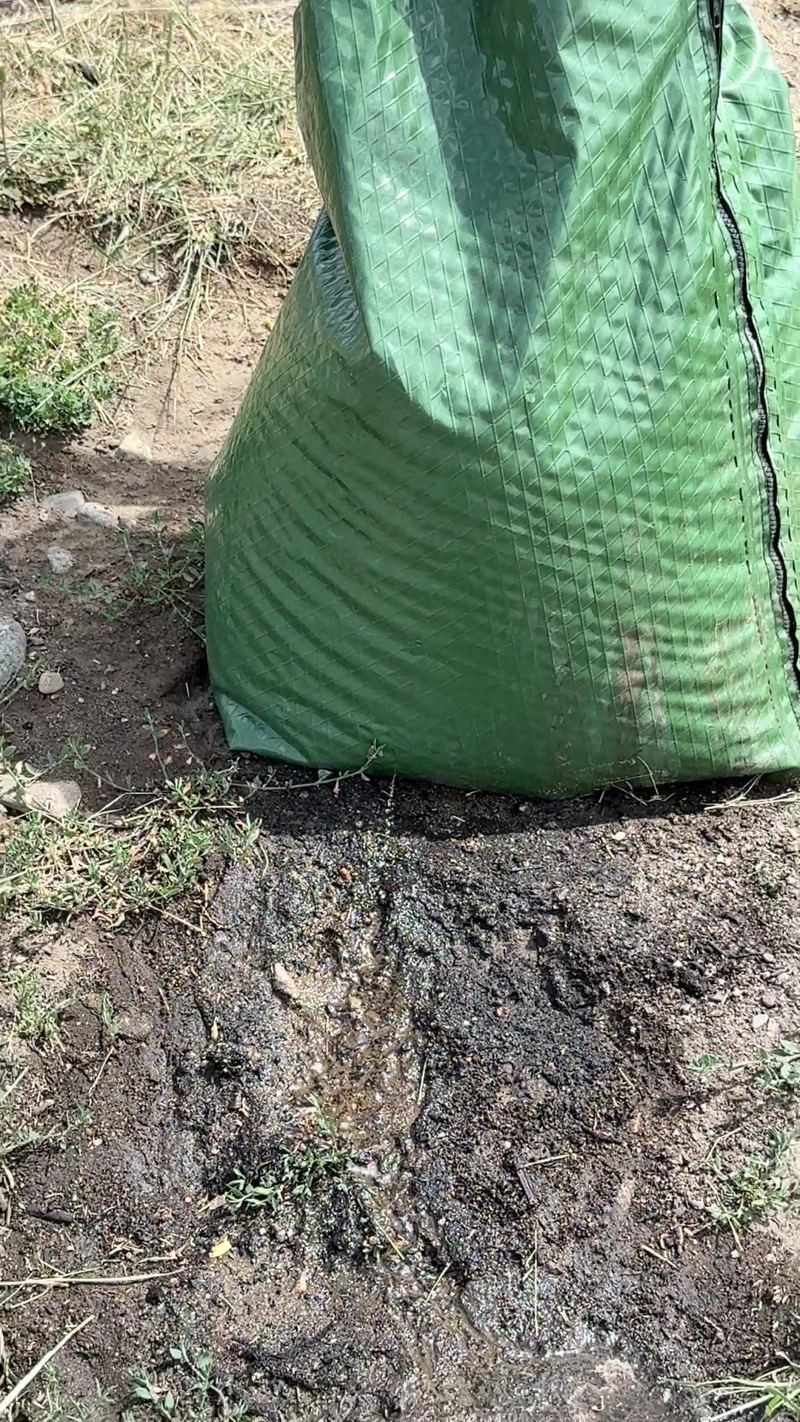 Control — standard bag
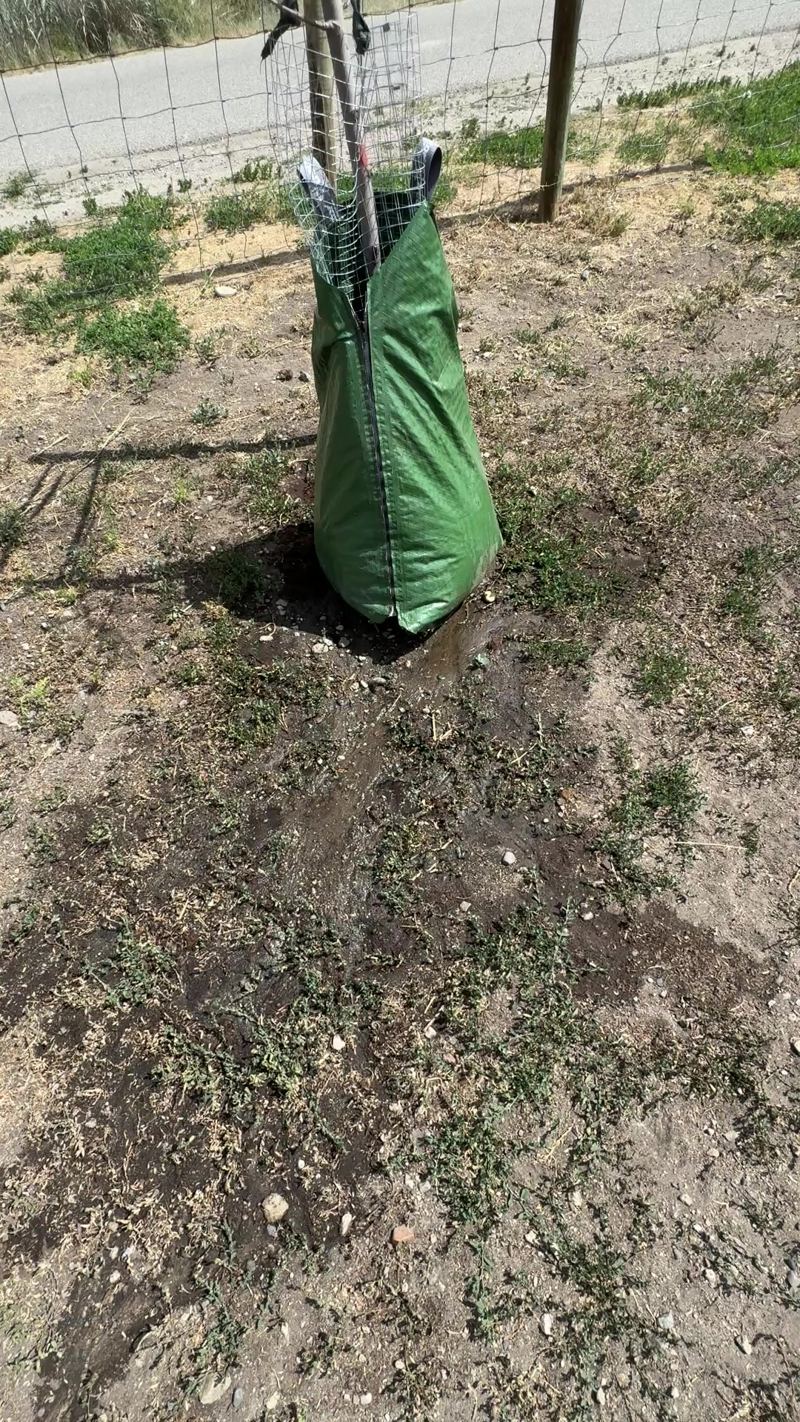 Control — standard bag
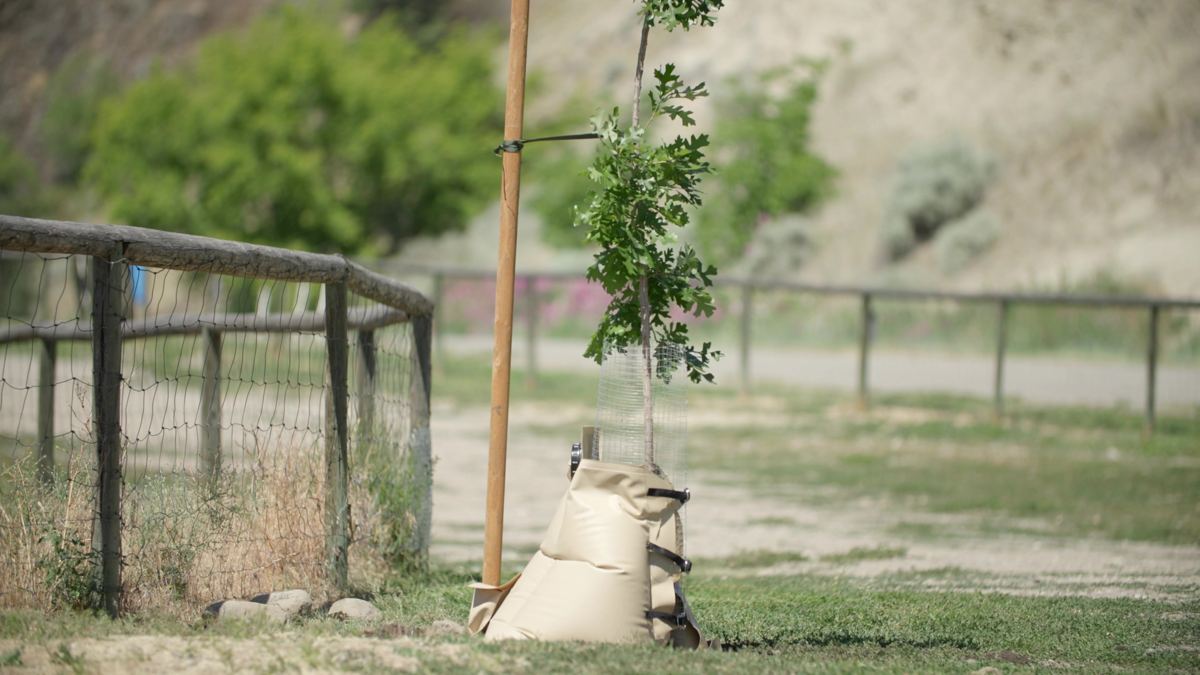 Tree Guardian
What's measured next
These photos are observational. The measured comparison — survival at 12 and 24 months and visit cadence — comes from the municipal pilots, starting with the summer 2026 install. Continuous soil-moisture data comes from a separate ten-tree UBC + University Neighbourhoods Association science pilot at Hampton Place with postdoctoral monitoring, now pending approval. For municipal pilots, wireless soil-moisture sensors are an optional add-on should you wish for more data. AGTIV REACH mycorrhizal fungi supplied for trials · Patent pending · Supported by Foresight Canada.
Partner branding withheld pending publicity clearance. Results will be posted here as they come in.
Want this comparison running in your city?